Are you excessively worrying? Why it happens and how to stop it

0:00
0:00
https://upliftwebdesign.com/wp-content/uploads/2022/05/Caelon-Keys.mp3
Free

Download our best tips on reducing anxiety and worrying

Useful advice to help you stop your worry spirals, catastrophic thinking, and start to experience less anxiety

Download now
Published:
April 24, 2025
Text:
Photo:

Do you overthink every concern that pops into your head? While it might feel impossible to stop, you're actually more in control of your worrying than you think. Read on to learn how you can start letting your worries take up less space.

What we believe about our thoughts informs how we deal with them. Stressful thoughts are not necessarily important thoughts.

You might think that negative thoughts and feelings must always have a cause. That when you feel anxious, there is an important reason for it, and you need to figure it out in order to feel better.

But the restlessness and anxiety you feel aren't necessarily there for a specific or important reason. And if they are, they could simply be a byproduct of worrying and overthinking a situation.

What if your negative thoughts are causing panic and anxiety because you believe they're significant, and not because they're inherently important?

Anxiety and restlessness are normal feelings that pass on their own — they're not a cause for concern

It's important to realize that everyone feels anxious and restless from time to time. But one thing almost everyone who suffers from anxiety has in common is the excessive amount of attention they pay to unpleasant feelings. Why do I have this thought? What does it mean? Should I explore every possible consequence this could have on my life? 

It's totally understandable that some people try to prepare by exploring. You might think, 'I'm mentally preparing myself for all eventualities.'

But when you do this, you're making yourself more anxious.

If you leave worry and anxiety alone it will pass, just like any other emotion you've ever had.

But if you consistently start worrying every time you feel uneasy or anxious, the feelings will last longer and feel stronger.

Free content
Download now

Worrying keeps your anxious feelings going

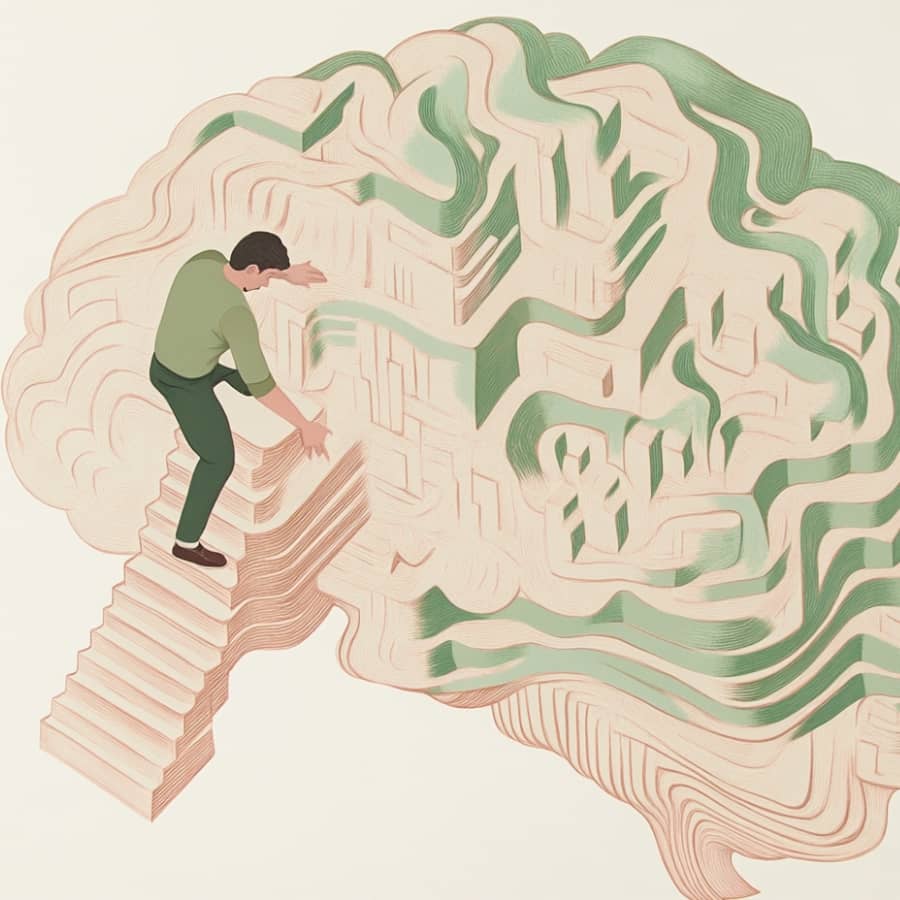
Have you ever had a dream that felt so real it surprised you? Humans have vivid imaginations. We can choose to play out scenarios in our heads at will, and we can experience the resulting emotions as if this visualization was the real thing. While this can be a useful ability in our everyday lives, playing out negative scenarios in your head repeatedly is like having front row seats to a horror movie that's written and directed by you.

Even though most worries only happen inside your head, your thoughts affect how you experience the world. When you worry a lot, you will feel like you live in a dangerous and unpredictable world — even if you have a pretty calm life. And when you experience the world as dangerous, it creates fertile ground for more unrest and more worries, creating a vicious cycle.

Most worries only happen in your head

How many worries have you had that never materialized? They felt scary and important in the moment, but did they actually happen? Most probably didn't. (And the ones that did happen, you were most likely able to deal with). We can waste an enormous amount of time worrying about (and preparing for) things that will never happen, and in doing so, we create unnecessary work, stress, and drama.

Some people are able to break the cycle simply by recognizing their negative thought processes and choosing to stop engaging in them. But many will need professional help to recognize and eventually break these negative cycles. If you could use extra support, try booking a session with one of our metacognitive-certified therapists today.

If you've tried other types of therapy but didn't feel that it helped, take this quiz to find out if MCT can help you.

Related articles

Are you constantly worried about your mental health? Rethink mental health anxiety with MCT

Mental health anxiety, or being afraid of mental illness, is a common experience — though most people don’t realize how widespread a problem it is, or when they're engaging in it.

How to manage the mental health impact of tinnitus

Tinnitus is a common condition that affects roughly 10-15% of the population to some degree. It's especially common among older adults, particularly in those with hearing loss.

Are you scared of flying? Read this to overcome airplane anxiety

Fear of flying, also known as aerophobia, is a common phobia that affects up to 40% of people. And with more coverage of airplane issues in the news these days, that anxiety may feel more prevalent.

An effective new approach to Generalized Anxiety Disorder, using Metacognitive Therapy

Generalized Anxiety Disorder (GAD) is one of the most common yet misunderstood mental health conditions. It’s often described as free-floating anxiety, meaning it’s not necessarily tied to specific situations or objects.

Navigating the news: How to manage anxiety during political unrest and global conflict

It’s easy to feel overwhelmed by everything happening in the world right now — the political tension, high stakes elections, war and conflict, and economic instability — all of which are streamed in nonstop social media coverage and 24/7 news cycles.

A practical guide to overcoming impostor syndrome and self-criticism

If you find yourself regularly doubting your own skills, talents, and successes, fearing people will “find out” that you’re not worthy or capable, you’ve likely experienced impostor syndrome.

Answering your common objections to Metacognitive Therapy

If you're new to Metacognitive Therapy, you might feel some resistance as you learn more about it. That's completely understandable.

Overcome social anxiety in the workplace, with Metacognitive Therapy

If you’ve felt overly self-conscious or even ashamed at work, fixating on your shaking hands or stumbling on words, you know how overwhelming and paralyzing social anxiety can feel.

If you’re constantly bringing work stress home with you, read this

We’re constantly sold the idea of achieving work-life balance, but it can feel like chasing a moving target. Is it even possible? And how do we separate our work from our home life?

The real cause behind depression (and what to do about it)

Why do some people get depressed and others don't? While some experience a lot of pain in their life without it seeming to significantly affect them, others are depressed despite an outwardly good life.

Fusion beliefs and OCD: How they inform thoughts, behaviors, and rituals

Fusion beliefs are the mistaken idea that certain thoughts are intertwined with actions or outcomes. This can lead to someone feeling as if their thoughts have power or significance, and that their thoughts can potentially cause harm.

Metacognitive beliefs: What they are and why are they important?

What's the best way to deal with difficult thoughts and emotions? Should you focus more on your negative thoughts? Process them? Try to ignore them? Can you just leave them be? Is it helpful to worry? Can you even control your worry and rumination? Does rumination help you figure things out, or does it make you feel worse? And can you go crazy from worry?

So you want to start MCT — here is how to find the right therapist

Choosing a therapist is a significant decision in your mental health journey. Opting for a metacognitive therapist certified by The Metacognitive Institute ensures that you are in capable and qualified hands. This registration is not just a piece of paper; it's a promise of quality, ethical practice, and a commitment to the best outcomes in mental health therapy. Remember, when it comes to your mental health, the quality of treatment you receive can make all the difference.

Inside the therapy room: What to expect over the course of MCT treatment

Starting therapy can be both exciting and daunting. If you're just beginning your MCT journey, know that Metacognitive Therapy is a well-researched and effective approach that can provide rapid relief. Here's what to expect.

Panic disorder: 5 mistakes you make that worsen anxiety

Many of us will experience a panic attack at least once in our lives. But only some go on to develop a problem with recurring panic attacks, or a panic disorder. Did you know that strategies for avoiding a panic attack can actually sustain the disorder? Here's how to break the cycle.

Detached mindfulness: What it is and how it works

Every day, you have thousands of thoughts. Where do they all go? And what happens to the ones that you don't engage with? Most of them just pass through, like water through a strainer.

What is Metacognitive Therapy (MCT)

Metacognitive Therapy (MCT) is an evidence-based method of psychotherapy based on over 30 years of research on the causes of mental disorders and how the mind works. It's making major waves in the field of psychotherapy, as MCT represents a paradigm shift in how mental health disorders are understood and treated.

How meta-awareness (the recognition of your thought patterns) impacts mental health

If you're struggling with anxiety, overthinking, or mental health issues, a key step in improving your emotional wellbeing is becoming more conscious of how your own thinking patterns and mental activities are affecting you.

Can MCT Help With My Problem?

If you've explored therapy before, but you didn't feel like it helped resolve your issues, a revolutionary new approach called Metacognitive Therapy (MCT) may be the answer.

Does positive thinking help fix anxiety?

You’ve probably been told at some point to “just think positively” or replace negative thoughts and worries with positive ones. In recent years, there's been a major surge in positive thinking, uplifting mantras and affirmations, and reprogramming your thoughts to improve mental health.

Post-traumatic stress disorder: Which strategies help VS hinder recovery?

It's important to remember that after a traumatic event it's completely normal for you to have intrusive and unpleasant thoughts, images and memories. Bodily restlessness is also normal and expected in the first days and weeks after the event. When you're in pain it seems only natural that you come up with strategies to reduce the pain. But many common strategies that people use to deal with trauma are unhelpful and can even aggravate the problem, creating a self-reinforcing cycle.

Post-traumatic stress disorder: Why do some people develop PTSD?

If you've been through a traumatic experience, you might struggle with intrusive and unwanted thoughts or images from the event afterwards.

Why MCT can help more people with its transdiagnostic approach

Metacognitive Therapy (MCT) is revolutionizing mental health treatment by targeting the thought processes underlying a wide range of psychological disorders. Unlike traditional methods that focus on talking through specific thoughts or problems, dealing with them one at a time, MCT offers a unified approach to recovery. This transdiagnostic perspective shows more efficient and effective outcomes across multiple conditions.

7 tips to stop worrying (that actually work!)

If you're looking to take back control of your thoughts and reduce your worry, start with these seven tips, which are based on Metacognitive Therapy research, and our experience helping thousands of clients improve their anxiety and worrying. These tips have been proven to work, and can help change your relationship with worrying in as little as a few weeks.

Do you get nighttime anxiety? Here’s how to sleep without stress

Nighttime can be really challenging for people who worry a lot or experience anxiety. The isolation and stillness of the night can create more space for our worries, making it extra hard to sleep. During the day, distractions and activities can keep rumination at bay. But at night, our worries often catch up to us.

9 Game-changing benefits of Metacognitive Therapy

Imagine a therapy that helps you overcome overthinking... Metacognitive Therapy (MCT) is a refreshing new and effective form of psychotherapy that's rapidly gaining popularity, as it focuses on how you relate to your thoughts, rather than the thoughts themselves.

Do you wake up feeling anxious in the morning? Here’s what to do

If you regularly wake up with anxiety in the morning for no clear reason, you're not alone. It’s an overwhelming feeling to wake up with unease and a racing heart, and to not know why. But morning anxiety is actually a common experience, and you don't need to understand what's causing it to feel better. The key is changing how you respond to it.

If you feel like you have no triggers for anxiety, read this

Learn to spot anxiety triggers and break the cycle using metacognitive therapy with actionable tips for managing your mental health.

Dealing with compulsive thoughts and OCD: a metacognitive perspective

If you're plagued with compulsive, unwanted thoughts, you've come to the right place. First off, know that it's possible to have invasive and unpleasant thoughts without developing obsessive-compulsive disorder (OCD). So why do some people develop OCD, and others don't?

5 causes of anxiety and what you can do to get better

Can you have anxiety for no reason? No. There’s actually always a reason for anxiety — but it might not be what you think. Metacognitive Therapy (MCT) is a new type of psychotherapy that offers a fresh perspective on what causes and sustains your anxiety.

Are you excessively worrying? Why it happens and how to stop it

Do you overthink every concern that pops into your head? While it might feel impossible to stop, you're actually more in control of your worrying than you think. Read on to learn how you can start letting your worries take up less space.

Dealing with performance anxiety from a metacognitive POV

Performance anxiety can be crippling, often exacerbated by common coping strategies that increase self-awareness and insecurity. Shifting focus outward and limiting rumination are key to overcoming this anxiety. Discover effective techniques to transform your approach and enhance confidence in presentations and performances.

Button Text